


Investible is proud to participate in Outlier Space's Pre-Seed round alongside lead investor GD1, Icehouse Ventures, Nova Threshold, Side Stage Ventures, Airtree and Brian Cartmell. Investible’s participation into the round is part of the Investible Early-Stage Fund 3 and the second investment in the Fund.
Outlier Space is building small, autonomous and uncrewed satellites designed to serve as orbital factories that lifts high-value materials into low Earth orbit (LEO) and returning these manufactured materials safely to earth.
In these investment notes, we will dive into two things:
1. Why the shift from crewed to uncrewed orbital manufacturing is one of the most consequential infrastructure transitions in the emerging space economy; and
2. Why we believe Jamie France and Outlier Space are positioned to become the defining platform for this market.
What is LEO and why is it attracting billions of investment?
There is a version of manufacturing that physics simply will not allow on Earth. Certain crystal structures, semiconductor lattices, and biological compounds require specific conditions such as near-perfect microgravity, extreme temperature uniformity, near-total environmental isolation; conditions that gravity perpetually disrupts at ground level.
The solution has been explored by NASA and the research community for decades, and it is orbit. Low Earth orbit (LEO), as defined by NASA, is a stretch of space at an altitude of 2,000km or less, and underpins global navigation, telecommunication, defence and worldwide connectivity.
A satellite in LEO is not floating, it is continuously falling around the planet, and that state of perpetual freefall creates a zero-gravity environment where matter behaves differently at a molecular level: Molecules assemble more uniformly; crystals grow without defects; pharmaceutical compounds crystallise in ways that improve drug efficacy; and semiconductor materials reach levels of purity that terrestrial production cannot achieve.
The products that emerge from microgravity are extraordinarily valuable. Next-generation semiconductor materials such as diamond and gallium nitride can be worth tens of millions of dollars per kilogram, while pharmaceutical crystals grown in orbit can serve as templates for entire drug manufacturing runs on Earth.
And we see billions of dollars being poured into space investments. From Nvidia to SpaceX, some of the world's largest technology companies are betting that orbit will become the next critical layer of industrial infrastructure. More than USD 45 billion flowed into the sector in 2025 alone, contributing to over USD 400 billion invested into the broader space economy since 2009 according to Space IQ.
Space Capital CEO Chad Anderson describes the industry as being in the "early innings of a multi-decade infrastructure cycle", a Netscape moment for orbit, where commercialised access triggers a wave of application-layer innovation that is still only just beginning. The deployment data reflects it: SpaceX's Starlink constellation now exceeds 9,500 satellites, Amazon LEO has FCC approval for over 7,500, Blue Origin is targeting more than 5,000 by 2027, and China has filed plans for over 200,000 across 14 constellations. As one industry executive put it to CNBC, orbital access is rapidly becoming a strategic asset on par with ports, undersea cables, or energy grids.
At first glance, this big tech infrastructure wave and microgravity manufacturing appear to be separate stories. They are not. Both are driven by the same underlying shift: orbit is no longer a vantage point for observing Earth, it is becoming a place where valuable work gets done.
The clearest signal of that shift came when Nvidia's CEO Jensen Huang unveiled a platform designed to bring AI computing into orbit, declaring that "space computing, the final frontier, has arrived." SpaceX, having merged with xAI, has since filed to launch up to one million solar-powered orbital data centres. These are not observation satellites. They are orbital factories for compute, and they depend on the same falling launch costs, the same high-cadence rideshare infrastructure, and ultimately the same reliable return logistics that microgravity manufacturers like Outlier need.
Moreover, the AI boom fuelling big tech's orbital ambitions is also creating surging demand for next-generation semiconductor materials, and some of those materials, including the gallium nitride and diamond substrates that next-generation chips require, can only be grown with the purity and structural perfection that microgravity enables. The chips that will power Nvidia's orbital data centres may ultimately depend on materials that only an orbital factory can produce. The demand chain is circular: AI drives LEO investment, LEO investment lowers launch costs, lower launch costs make microgravity manufacturing viable, and microgravity manufacturing produces the advanced materials that AI hardware demands.
The ISS validated the science, now it needs infrastructure
For 25 years, microgravity manufacturing has lived almost entirely on the International Space Station (ISS). NASA's InSPA program alone invested over USD 60 million across more than 20 in-space production projects, and the results have validated the underlying science comprehensively. In 2022, Redwire Corporation made the first commercial sale of a space-manufactured material: an optical crystal grown aboard the ISS that implied a value of approximately USD 2 million per kilogram. The market inflection came in 2024, when Varda Space Industries, backed by Founders Fund, Lux Capital, Khosla Ventures, and General Catalyst, successfully grew crystalline pharmaceutical compounds in orbit and returned them intact. This was the first commercially manufactured product made in space and delivered to Earth, confirming that microgravity production can yield viable, saleable goods.
But despite this scientific breakthrough, the ISS is scheduled for de-orbiting by 2030 and its impending retirement is creating a structural infrastructure gap precisely as commercial demand for microgravity access is beginning to scale. Crewed platforms like the ISS were never optimally designed for manufacturing. Life support requirements impose enormous cost and logistical overhead. Crew activity, vibrations, and environmental noise disrupt delicate material processes. And some manufacturing applications — particularly semiconductor production, which requires furnace temperatures of up to 2800°C — are fundamentally incompatible with a crewed environment.
The industry is moving decisively toward autonomous, uncrewed orbital platforms. These eliminate life support costs, remove environmental interference, and can be purpose-built for the specific thermal, power, and isolation requirements of high-value manufacturing. The next three to five years represent a critical window: the ISS is winding down, commercial space stations are still years from full operation, and demand for autonomous return capability is building faster than the infrastructure to meet it.
This is the window Outlier is building into.
Outlier's approach: reimagining orbital return economics
Outlier is built around a simple insight: the economics of space manufacturing are ultimately determined by what can be returned from orbit, and at what cost.
Rather than treating re-entry as a constraint, Outlier has designed its platform around making return logistics more scalable, reusable, and commercially viable. The company's approach enables significantly larger payload capacity than existing solutions while pursuing a lower-cost operating model through reusability.
At the heart of this is a novel re-entry architecture that takes a fundamentally different approach from conventional heat shield systems. While we won't delve into the technical details, the design draws on decades of research and is intended to unlock a combination of payload capacity, reusability, and operational efficiency that has historically been difficult to achieve simultaneously.
The result is a platform designed to support a broad range of orbital manufacturing applications, from semiconductors to life sciences, while creating the potential for attractive economics as flight cadence increases. If successful, Outlier's advantage compounds with every mission flown.
The founder was built for this problem
We look for founders who have already solved hard problems in the real world.
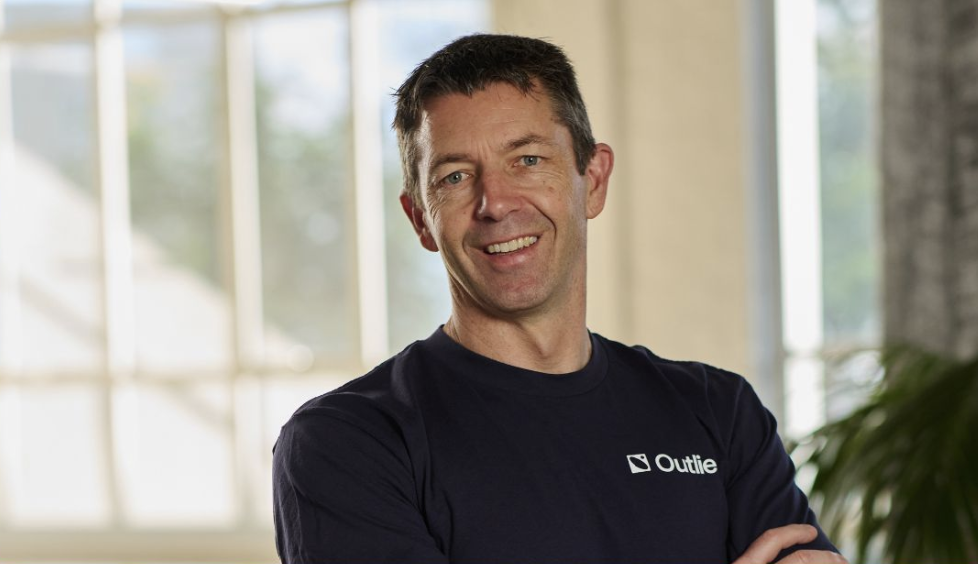
Jamie France spent over a decade at Rocket Lab, helping scale one of the world's most successful commercial aerospace companies from its early days into a global launch provider. Over that time, he held leadership roles across manufacturing, production, and launch operations, building and operating flight hardware at scale.
References consistently highlighted Jamie's ability to execute in highly complex technical environments while remaining pragmatic, coachable, and deeply customer-focused. He combines rare domain expertise with a clear understanding of how to build a capital-efficient company in an industry often known for the opposite.
Just as importantly, Jamie has assembled a network of experienced operators across spacecraft development, regulatory approvals, and mission operations who have helped build some of the industry's most advanced commercial space programs.
Why We Invested
Our conviction is built around four key factors:
1. Founder-market fit: few founders have Jamie's combination of operational scale, spacecraft manufacturing experience, and direct exposure to orbital return systems. His experience gives him a unique perspective on both the technical and commercial challenges of the market.
2. A critical infrastructure bottleneck: As microgravity manufacturing moves from experimentation toward commercial deployment, the ability to reliably and economically return products to Earth becomes increasingly important. Outlier is building directly into that constraint.
3. Strong market timing: Multiple industry tailwinds are converging, including the growth of commercial space stations, increasing interest in microgravity manufacturing, and expanding demand for orbital infrastructure. We believe the next decade will see a significant increase in activity across these markets.
4. A differentiated economic model: Outlier's architecture is designed around reusability and operational efficiency from day one. If the company can successfully validate its approach, it has the potential to establish a meaningful cost advantage in a market where economics matter as much as technical capability.
Bringing space back down to earth
The road ahead is clear: validate the technology, prove the economics, and set off to space (with a whole load of physics and engineering in between). It's an ambitious undertaking in one of the hardest industries on the planet. Fortunately, Jamie and the team he’s building has spent much of his career doing exactly that.
As orbital manufacturing moves from science experiment to commercial reality, we believe the winners won't just be the companies building in space, they'll be the companies that make it possible to bring those products home.
We're excited to back Jamie and the Outlier team as they work to build that future, one re-entry at a time.
.png)
Written by
Investible

.png)

.jpeg)
stay in the loop
The Investible newsletter is your source for our latest news, insights and more


The Investible group of companies includes various entities who are corporate authorised representatives (CAR) of Boutique Capital Pty Ltd (BCPL) AFSL 508011. The full list of entities are detailed here.
CAR has taken all reasonable care in producing all the information contained in the website including but not limited to reports, tables, maps, diagrams and photographs. However, CAR will not be responsible for loss or damage arising from the use of this information. The contents of this website should not be used as a substitute for detailed investigations or analysis on any issues or questions the reader wishes to have answered.
You may download the information for your own personal use or to inform others about our materials, but you may not reproduce or modify it without our express permission. To the extent to which this website contains advice it is general advice only and has been prepared by the Company for individuals identified as wholesale investors for the purposes of providing a financial product or financial service, under Section 761G or Section 761GA of the Corporations Act 2001 (Cth).
The information in this website is not intended to be relied upon as advice to investors or potential investors and has been prepared without taking into account personal investment objectives, financial circumstances or particular needs. Recipients of this information are advised to consult their own professional advisers about legal, tax, financial or other matters relevant to the suitability of this information.
Any investment(s) summarised in this website is subject to known and unknown risks, some of which are beyond the control of CAR and their directors, employees, advisers or agents. CAR does not guarantee any particular rate of return or the performance, nor does CAR and its directors personally guarantee the repayment of capital or any particular tax treatment. Past performance is not indicative of future performance.
All investments carry some level of risk, and there is typically a direct relationship between risk and return. We describe what steps we take to mitigate risk (where possible) in the investment documentation, which must be read prior to investing. It is important to note risk cannot be mitigated completely.
Whilst the contents of this website is based on information from sources which CAR considers reliable, its accuracy and completeness cannot be guaranteed. Data is not necessarily audited or independently verified. Any opinions reflect CAR’s judgment at this date and are subject to change. CAR has no obligation to provide revised assessments in the event of changed circumstances. To the extent permitted by law, BCPL, CAR and their directors and employees do not accept any liability for the results of any actions taken or not taken on the basis of information in this website, or for any negligent misstatements, errors or omissions.
Subscribe to our newsletter
Be the first to receive the latest news, insights and resources from Investible